

Popular Products
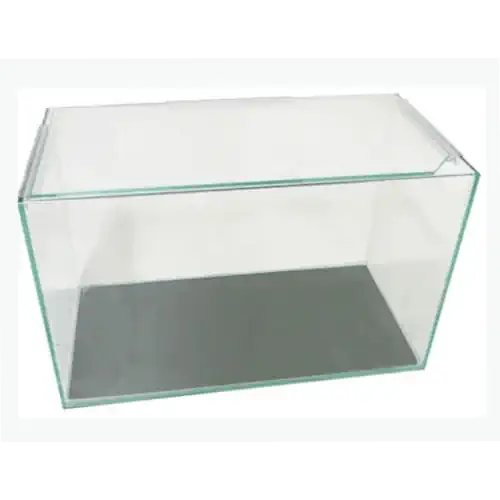
Aquarium (60x30x38cm) 69L
Store Pickup Only — this item does not ship and is available for pickup at our Coburg North store only. Aquarium (60x30x38cm) 69L With its ideal balance of durability, style, and functionality, the 69L (Approx) 2ft Tank will revolutionize your fishkeeping experience. This aquarium...
- $149.95
$180.00- $149.95
- Unit price
- / per
Compact 11L Nano Aquarium Fish Tank - Perfect for Shrimps, Snails, and Plants
Compact 11L Nano Aquarium – Perfect for Shrimp, Snails, and Plants Create a beautiful and vibrant aquatic environment with the Compact 11L Nano Aquarium, designed for small-scale aquascaping and delicate aquatic life. Perfect for shrimp, snails, and live plants, this sleek nano tank offers...
- $40.00
$49.95- $40.00
- Unit price
- / per
39L AQUARIUM FISH TANK
Create a vibrant aquatic world with the 39L Aquarium Fish Tank, a versatile and spacious choice for both beginners and experienced fishkeepers. With its 39-liter capacity, this tank offers plenty of room for a thriving underwater ecosystem, making it perfect for tropical fish, shrimp,...
- $90.00
$100.00- $90.00
- Unit price
- / per

A Complete Guide For Shrimp Keepers
🦐 Shrimp Keeping — A Complete Guide for New & Experienced Shrimp Parents
Tank age, biofilm, and the nitrogen cycle — for starters.
In today’s chapter of shrimp keeping, we want to share some important and honest information with our valued customers — whether you are buying shrimp from a local aquarium shop or ordering them online.
Shrimp keeping is one of the most fascinating parts of the aquarium hobby, but it is also one of the most misunderstood. Many people see shrimp as “easy cleanup animals,” but in reality, they are delicate, highly reactive, and extremely environment-sensitive creatures. Their success depends far more on your aquarium setup than the shrimp itself.
In this article, we will be covering the most important aspects of shrimp keeping — from buying shrimp, acclimating them correctly, understanding their colouring, molting process, breeding behaviour, and feeding requirements.
🧪 1. The Foundation: Tank Age & The Nitrogen Cycle
Before you even think about adding shrimp, your aquarium needs to be properly established.
A brand-new tank — even if it looks clean and clear — is usually not shrimp-safe. Shrimp thrive in stable, mature environments, not freshly set-up aquariums.
This is where the nitrogen cycle comes into play.
In a healthy aquarium, beneficial bacteria develop inside your filter, substrate, and surfaces of decorations. These bacteria break down toxic waste:
-
Fish/shrimp waste and uneaten food produce ammonia (toxic)
-
Beneficial bacteria convert ammonia into nitrite (also toxic)
-
Another group of bacteria then convert nitrite into nitrate (less harmful)
A tank is considered fully cycled when ammonia and nitrite are consistently at zero, and only nitrates are present at low levels.
Why does this matter for shrimp?
Shrimp are far more sensitive than fish. Even small spikes of ammonia or nitrite can stress, weaken, or kill them. That is why we always recommend waiting at least 4–8 weeks (or longer) before adding shrimp to a new tank — giving time for biological stability to establish.
🌿 2. Biofilm — Shrimp’s Natural Food Source
One of the biggest signs of a truly shrimp-ready tank is the presence of biofilm.
Biofilm is a thin layer of microorganisms, algae, bacteria, and organic matter that naturally grows on plants, driftwood, rocks, and glass in a mature aquarium. It often looks like a slight slimy or dusty coating — which many beginners mistake for “dirt.”
For shrimp, biofilm is like a natural buffet.
They spend most of their day grazing on it, picking tiny nutritious particles from surfaces. This is why shrimp tend to do poorly in brand-new, overly sterile tanks with no biofilm.
A tank rich in biofilm:
-
Helps shrimp settle in faster
-
Reduces stress
-
Supports better survival rates
-
Encourages natural behaviour and activity
If your tank is too clean, too new, or too chemically treated, shrimp may struggle to find enough natural food.
🦐 3. Buying Shrimp: Understanding Grades
From a customer service point of view, we always strive to provide the best quality shrimp stock available.
That is why our shrimp are mostly graded into:
-
High Grade
-
Medium Grade
-
Low Grade
These grades are determined based on:
-
Colour intensity
-
Colour coverage
-
Pattern quality
-
Genetic potential
High-grade shrimp are selected for their strong, rich colours and desirable patterns under ideal conditions.
However — and this is very important — grade does NOT mean colour is permanent or guaranteed to look the same in every tank.
🎨 4. Shrimp Colour & Chromatophores (Why They Change Colour)
From a customer’s point of view, it is completely normal to feel that shrimp sometimes don’t look exactly like the photos when bought online or even in-store.
This is NOT because the shrimp are “fake,” “low grade,” or “misrepresented.” It is simply biology.
Shrimp have special pigment cells called chromatophores.
These cells allow shrimp to:
-
Lighten or darken their colour
-
Blend into their environment
-
React to stress, lighting, and surroundings
In bright tanks with light-coloured substrate, shrimp often:
-
Look paler
-
Appear washed out
-
Seem closer to wild-type colour
In darker, planted tanks, the same shrimp will:
-
Appear deeper in colour
-
Show stronger contrast
-
Look more like the photos
A high-grade shrimp placed in a bright white substrate tank with no plants can look dull and faded — even though its genetics are still high quality.
This is natural survival behaviour. In the wild, shrimp need to blend in to avoid predators.
🌑 5. Why Your Aquarium Setup Matters More Than You Think
This is why your role as a shrimp parent is just as important as the quality of shrimp you purchase.
If shrimp are placed in a tank with:
-
Bright white or light sand
-
No plants
-
No moss
-
No hiding spots
-
Harsh lighting
They will feel exposed, stressed, and unsafe — and their colour will likely fade.
To help your shrimp settle properly, we strongly recommend:
✅ Ideal Shrimp Environment:
-
Mature, fully cycled tank
-
Plenty of biofilm
-
Dark substrate (black or deep brown is best)
-
Dark background
-
Lots of moss (Java moss, Christmas moss, etc.)
-
Live plants and driftwood
-
Small caves or shrimp hides
-
Gentle, stable lighting
-
Stable water parameters (minimal fluctuations)
A well-planted, darker tank makes shrimp feel secure — and when they feel safe, their colours return and often become even more vibrant over time.
🔄 6. Acclimation — The Most Critical Step
Shrimp do not tolerate sudden changes in water conditions.
When you bring shrimp home, do NOT just dump them straight into your tank.
We recommend:
-
Drip acclimation for 30–60 minutes
-
Slowly mixing your tank water with their bag water
-
Minimising stress and temperature shock
Poor acclimation is one of the most common reasons shrimp fail to settle properly.
🦴 7. Molting — A Natural & Essential Process
Shrimp do not grow like fish — they grow by molting.
This means they shed their old exoskeleton and grow a new, larger one underneath.
You may sometimes see empty shrimp shells in your tank — this is completely normal.
Signs of healthy molting:
-
Active grazing before molting
-
Hiding more than usual
-
Shedding clean, intact shells
Problems can occur if water parameters are unstable, especially calcium and minerals — which are essential for shell formation.
That is why specialised shrimp food and mineral supplements are important for long-term health.
🍽️ 8. Feeding — Why Specialised Shrimp Food Matters
Feeding plays a huge role in shrimp colour, health, and breeding.
While algae wafers and generic fish food can be used occasionally, they are NOT ideal for premium shrimp.
We recommend:
-
Specialised shrimp food brands
-
Foods designed for colour enhancement
-
Mineral-rich diets for healthy molting
-
Small, frequent feedings rather than large amounts
Overfeeding can also harm shrimp by polluting water, so less is often more.
🍼 9. Breeding — The Reward of Good Care
When shrimp are comfortable, healthy, and well-fed, they will naturally start breeding.
A berried (pregnant) shrimp will carry eggs under her tail until they hatch into tiny baby shrimplets.
A good shrimp tank should eventually:
-
Have visible babies
-
Show regular molting
-
Maintain stable population growth
This is the true sign of a successful shrimp setup.
🧘 10. Patience Is Key
Shrimp keeping is not about instant results.
They need time to:
-
Adjust to your tank
-
Build confidence
-
Establish routines
-
Regain full colour
If you provide the right environment, care, and patience, your shrimp will thrive — and their colours will naturally return and deepen.
At the end of the day, we supply high-quality shrimp — but how they look and thrive long-term depends greatly on the environment you provide them.
Happy shrimp keeping! 🦐🌿
The Ultimate Shrimp Colony
Shrimps Blue Dreams (Buy 8, get 2 Free)
- From $12.00
$14.00- From $12.00
- Unit price
- / per
Shrimps- Yellow Cherry
- From $10.00
$11.00- From $10.00
- Unit price
- / per
RED CHERRY SHRIMP MEDIUM GRADE
- From $6.00
$7.50- From $6.00
- Unit price
- / per
Cull Shrimps - Neo Caridina- 20pk
- $50.00
$53.48- $50.00
- Unit price
- / per
Bloody Mary Shrimps (Buy 8 Get 2 FREE)
- From $12.00
$15.00- From $12.00
- Unit price
- / per
FRESHWATER GLASS SHRIMP - AUSTRALIAN
- $5.50
$7.02- $5.50
- Unit price
- / per
Blue Black Shrimps (Buy 8 Get 2 Free)
- $14.00
$15.00- $14.00
- Unit price
- / per
Green Diamond Shrimp
- $14.14
$15.10- $14.14
- Unit price
- / per
- Choosing a selection results in a full page refresh.